
British police were among the first to utilise body-worn camera (BWC) technology, with early trials going back as far as 2005. Today, police are commonly seen wearing and using BWCs throughout the country.
Studies have shown that BWC usage by police drastically reduces the number of complaints made about the officers, while other studies have shown that the officers themselves have come to trust BWCs as an important piece of policing equipment.
So, police BWCs are useful, both to police officers and the public they protect, but what of a citizen’s right to privacy? Are BWCs always recording, or are they only used during criminal incidents? Furthermore, are BWCs activated at the officer’s discretion, or is there an official protocol in place?
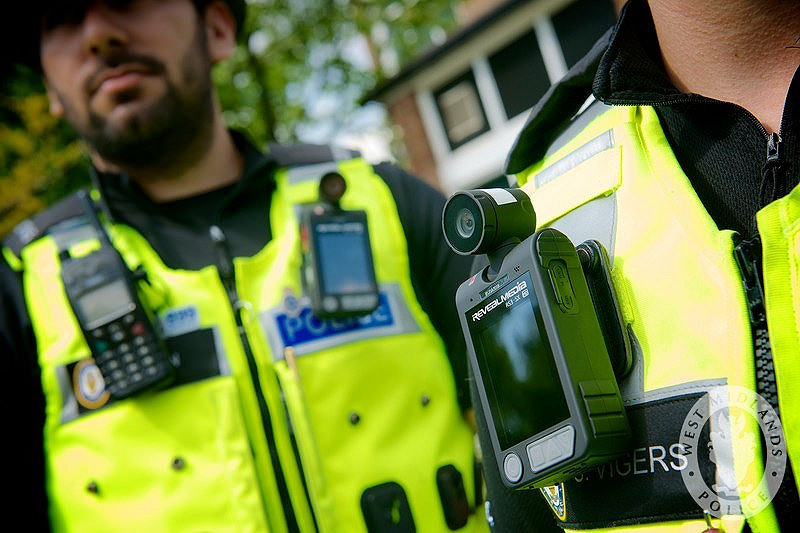
The answers to these questions are as follows. Firstly, police BWCs are not constantly recording. According to the Metropolitan Police, using a BWC is not part of a normal patrol. Many British police officers will wear BWCs as part of their equipment, but will only use them if an incident occurs (such as a crime being committed).
The second question requires a slightly more nuanced answer. BWCs are activated at an officer’s discretion. However, there are guidelines in place which describe the proper circumstances for the activation of a BWC. A police officer is therefore not permitted to simply record the public as they see fit. They must only do so if an incident is in progress, or if they believe that an incident is about to occur.
Officers are trained to activate their cameras “at the start of an incident or encounter”. Recording will typically continue until the incident’s resolution, or until another form of surveillance (e.g., CCTV) takes over.
It is worth noting, however, that many BWCs make use of a pre-record feature lasting up to about 90 seconds. This means that, once activated, the footage taken by the police camera can sometimes include around a minute and a half of events prior to the camera’s activation. This does not mean that the camera is recording, however, as the footage will only be stored to the camera’s memory in the event of footage being recorded by the officer.
At the end of the officer’s shift, all footage is uploaded to a secure location, whereupon it is either kept (if, for example, it is required as evidence) or deleted.
BWCs are subject to many of the same laws and guidelines as CCTV. However, because they capture sound, as well as increased personal details, such as clothing and facial features, they are considered more invasive. Critics have also suggested that, although the police consider BWCs to be “an independent witness” to a crime or incident, they inexorably offer evidence from the camera operator’s viewpoint. They are also activated and deactivated at the officer’s discretion, which could potentially obscure crucial details of the incident from being seen (such as provocation).
Due in part to these objections, together with other privacy-based concerns, police are also required to inform members of the public when they are being filmed. This means that, in the vast majority of cases, any person being filmed by police should be aware that a BWC is in operation.
As a law enforcement tool, BWCs can – and do – have a distinctly positive impact. However, concerns about privacy must always be taken seriously, and people’s right to privacy should always be respected.
Police BWCs are only activated when an interaction or incident is in progress, and at no other time is footage taken or stored.